
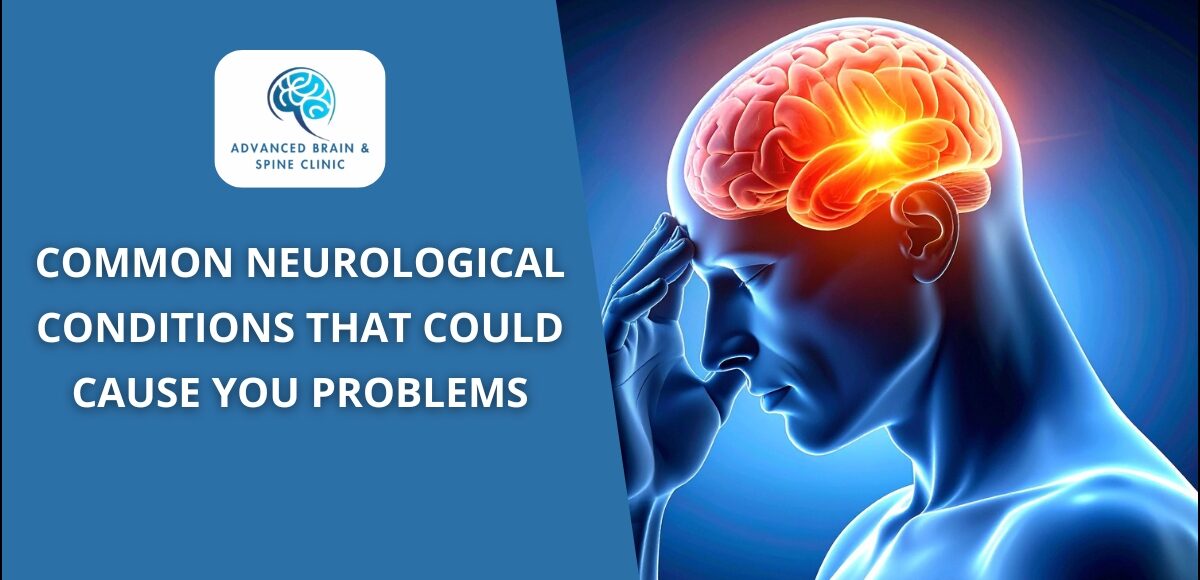
Common neurological conditions that could cause you problems
When your body isn’t working right, your first thought might be a muscle issue or just “getting older.” But sometimes, the root of the problem actually lies in your nervous system.
Your brain, spinal cord, and nerves control everything—movement, speech, memory, and even your senses. If something goes wrong in this system, it can show up in ways you wouldn’t expect.
Some of the most common neurological conditions that people face.
1. Migraine (Not Just a “Bad Headache”)
Many people say, “It’s just a headache, I’ll take a pill.” But a migraine is different. It is often a throbbing pain on one side of the head, accompanied by nausea, vomiting, or extreme sensitivity to light and sound.
What happens? It’s not just stress. It involves chemical changes in the brain and can sometimes be triggered by food, lack of sleep, or hormonal changes.
2. Epilepsy and Seizures
When someone has two or more unprovoked seizures, it is called epilepsy. A seizure is like a sudden “electrical storm” in the brain.
The myth: People do not always fall down and shake. Some seizures are just blank staring or confusion for a few seconds. If you’ve seen this happen, it needs medical attention.
3. Parkinson’s Disease
This is a slowly progressing condition where the brain cells that control movement start dying off.
Signs to watch for:
- Shaking hands (tremor) even when resting
- Stiffness in arms or legs
- Very slow movements (like taking small shuffling steps)
- Loss of balance
It mostly affects people over 50, but younger adults can get it too.
4. Stroke (Brain Attack)
A stroke is a medical emergency. It happens when the blood supply to a part of the brain is cut off.
Remember the B.E. F.A.S.T rule:
- Balance: Sudden dizziness
- Eyes: Blurred vision
- Face: One side of the face drooping
- Arms: Arm weakness on one side
- Speech: Slurred speech
- Time: Time to rush to the hospital
Even if symptoms go away quickly, it could be a “mini-stroke” (TIA), which is a strong warning sign.
5. Peripheral Neuropathy
Do you feel tingling, burning, or numbness in your hands and feet? It might feel like you are wearing socks when you aren’t.
This happens when nerves outside the brain and spinal cord are damaged. The most common cause? Diabetes. But vitamin deficiencies and alcohol use can also be reasons.
6. Dementia and Alzheimer’s Disease
Forgetting where you kept keys is normal. Forgetting what keys are used for is not.
Dementia is not a single disease, but a group of symptoms affecting memory and thinking. Alzheimer’s is the most common type. If your elder is getting lost in familiar places or repeating same questions daily, don’t ignore it as “senior moments.”
7. Multiple Sclerosis (MS)
In MS, your body’s own immune system attacks the protective covering of nerves. This disrupts communication between your brain and body.
Symptoms vary wildly—numbness, vision loss, balance problems, and fatigue. It is often misdiagnosed initially because symptoms come and go.
When Should You See a Neurologist?
You don’t need to live with these problems. If you notice:
- Persistent headaches that change pattern
- Sudden numbness or weakness
- Memory loss affecting daily life
- Tremors or involuntary movements
- Difficulty walking
Consult Dr. Chetna Patil – Top Neurologist in Pune
If you are looking for expert care, Dr. Chetna Patil is a renowned Neurologist in Pune offering compassionate and advanced treatment for all the conditions mentioned above. Whether you are dealing with chronic migraines or managing a complex condition like Parkinson’s, getting the right diagnosis early can change your life.
Visit : Dr. Chetna Patil Neurologist in Wakad Pune | Neurophysician in Pimpri Chinchwad
Contact Number : +91 8010866994
Frequently Asked Questions
1. What are the top 3 most common neurological disorders?
The top three are migraines, stroke, and epilepsy. Alzheimer’s disease and other dementias are also extremely common in the elderly population.
2. When should I see a neurologist?
You should see a neurologist if you have frequent severe headaches, unexplained tingling/numbness, memory loss that disrupts daily life, tremors, or sudden vision problems.
3. Can neurological problems be cured?
Some conditions like migraines and epilepsy can be managed very effectively with medication. Others like Parkinson’s or Alzheimer’s currently have no cure, but treatments can slow progression and improve quality of life.
4. What happens in a first neurology appointment?
The doctor will take a detailed history of your symptoms, check your reflexes, strength, vision, and coordination. This is called a neurological exam. Further tests like MRI or EEG may be suggested.
5. Is stress a neurological disorder?
Stress itself is not a neurological disorder, but chronic stress can trigger neurological symptoms like tension headaches, migraines, and sleep disturbances. It can also worsen existing conditions.